

Havn.ai
An AI claims assistant for homeowners, built and run in-house
The brief
A property claim arrives in the worst week of someone's year and asks them to become an administrator: read a policy they've never read, keep receipts they didn't plan to keep, compare contractor estimates they can't interpret, and remember what an adjuster said on a call six weeks ago. The person on the other side of the claim does this every day, with software. The homeowner has a shoebox.
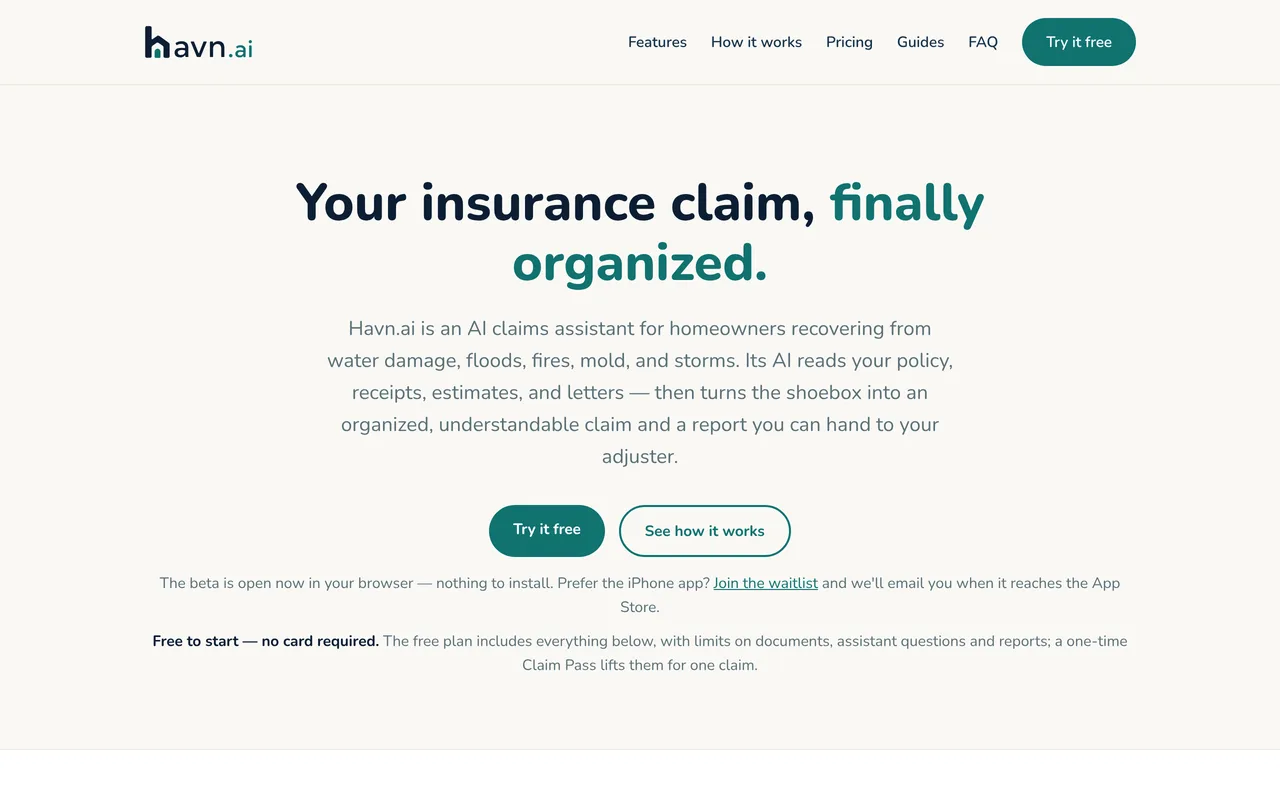
Havn.ai closes that gap. A homeowner uploads whatever paperwork they have, and the app reads it into an organized claim: coverage in plain numbers, displacement costs in a running ledger, belongings itemized, estimates side by side, and a report they can hand to their adjuster. We designed, built and host it ourselves, and every decision in it was ours to make — which is why we show it.
At a glance
- Product
- Havn.ai
- Relationship
- Our own product
- Engagement
- Concept, design, build, hosting and operation — all ours
- Status
- Public beta on the web; iPhone app in private testing; Android planned
- Services
- Mobile Applications, Web Applications, AI Agents & Automation, Cloud & Hosting
- Live site
- myhavn.ai
What we built
The work, piece by piece
One app for iPhone, Android and the web
The app is a single TypeScript codebase built with Expo and React Native, rendered to the web through React Native Web. The same screens ship as the browser beta and the iPhone app, with over-the-air updates so a fix doesn't wait on app review.
- Sign-in by emailed one-time code — no password to invent in a crisis
- Uploads queue on the device and survive a lost connection
- Each claim keeps its own documents, expenses and timeline
- Light and dark themes, large touch targets, dynamic type
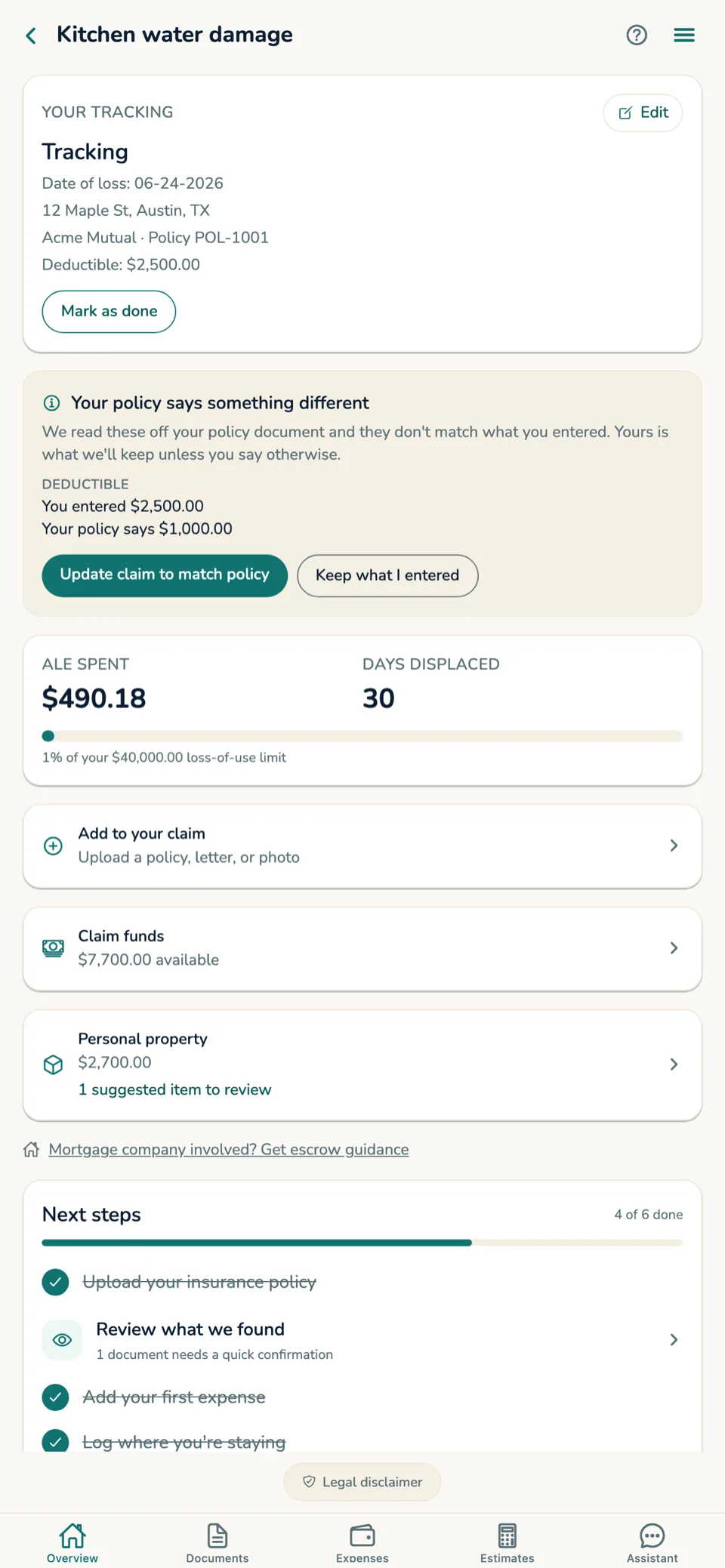
Claim overview — demo data Built withExpo / React Native / TypeScript / Expo Router / TanStack Query / NativeWind
A document pipeline that reads the shoebox
Every upload runs through an asynchronous pipeline: text recognition, classification, extraction against a schema for that document type, then linking into the claim. A receipt becomes an expense, a declarations page becomes the coverage card, a letter becomes a dated timeline event. Progress streams back per document, so a 40-page policy never looks stalled.
- OCR, classification and schema-validated extraction for each document type
- Social Security and card numbers redacted before any AI call
- Signed callbacks between the pipeline and the database
- Text chunked and embedded for search as it is filed
- Duplicates flagged instead of quietly doubling a number
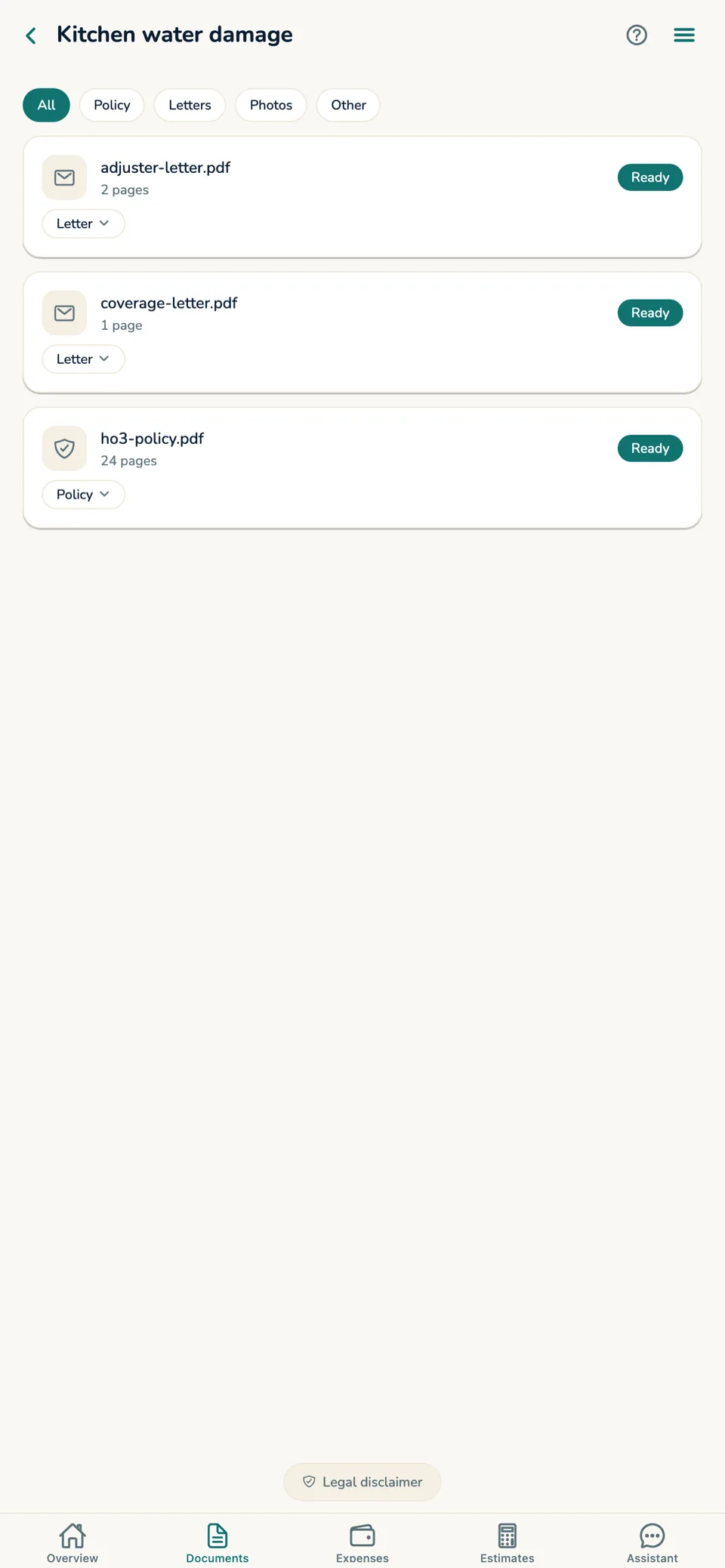
Documents, typed and filed — demo data Built withn8n / AWS Textract / Postgres / pgvector / Zod
AI that cites its sources or says nothing
Insurance is the wrong place for a model that improvises. The assistant answers only from the homeowner's own documents, quoting the file and page, and says so plainly when the documents don't contain the answer. Extracted figures below a confidence threshold wait for the homeowner to confirm them, and nothing unconfirmed moves a total.
- Hybrid retrieval: vector similarity and full-text search, fused
- Every answer cites the document and page it came from
- A legal-advice gate: it organizes and explains, and never advises
- Money held as integer cents from extraction to report
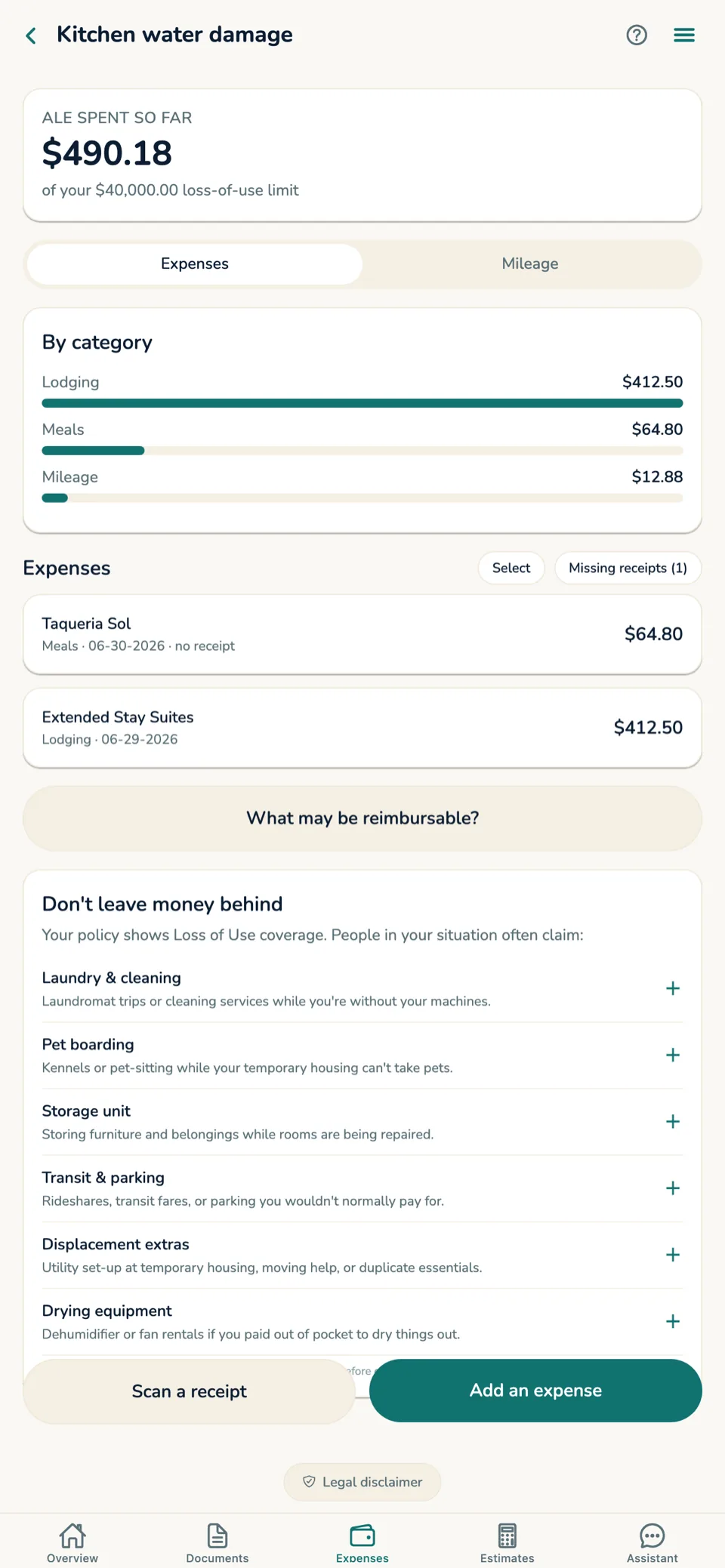
Loss-of-use ledger — demo data Built withRetrieval-augmented generation / Anthropic and OpenAI models / Deno Edge Functions
Private by design, and run like a product
Claims hold some of the most personal documents a family has. Access is enforced in the database, not just the app, and tested on every change. Behind the app sit an admin dashboard, report generation, monitoring and continuous deployment — the parts that turn a working prototype into something people can rely on.
- Row-level security on every table, with an automated isolation test suite
- Private file storage reached only through links that expire in minutes
- One-tap PDF report packet, and a hard delete that means it
- Database migrations and server functions deployed automatically on every merge
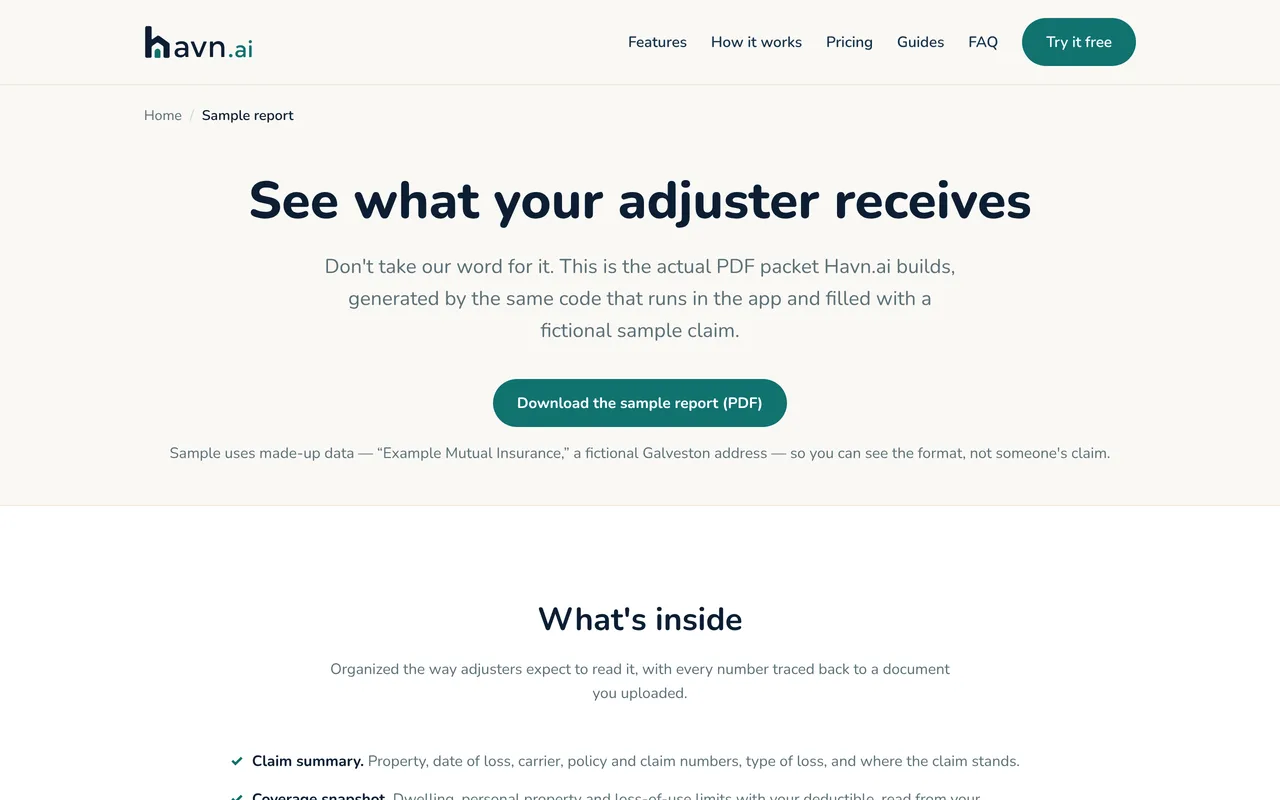
The report packet, from myhavn.ai Built withSupabase / Postgres row-level security / pgTAP / Next.js / AWS Amplify / Sentry
More from this project
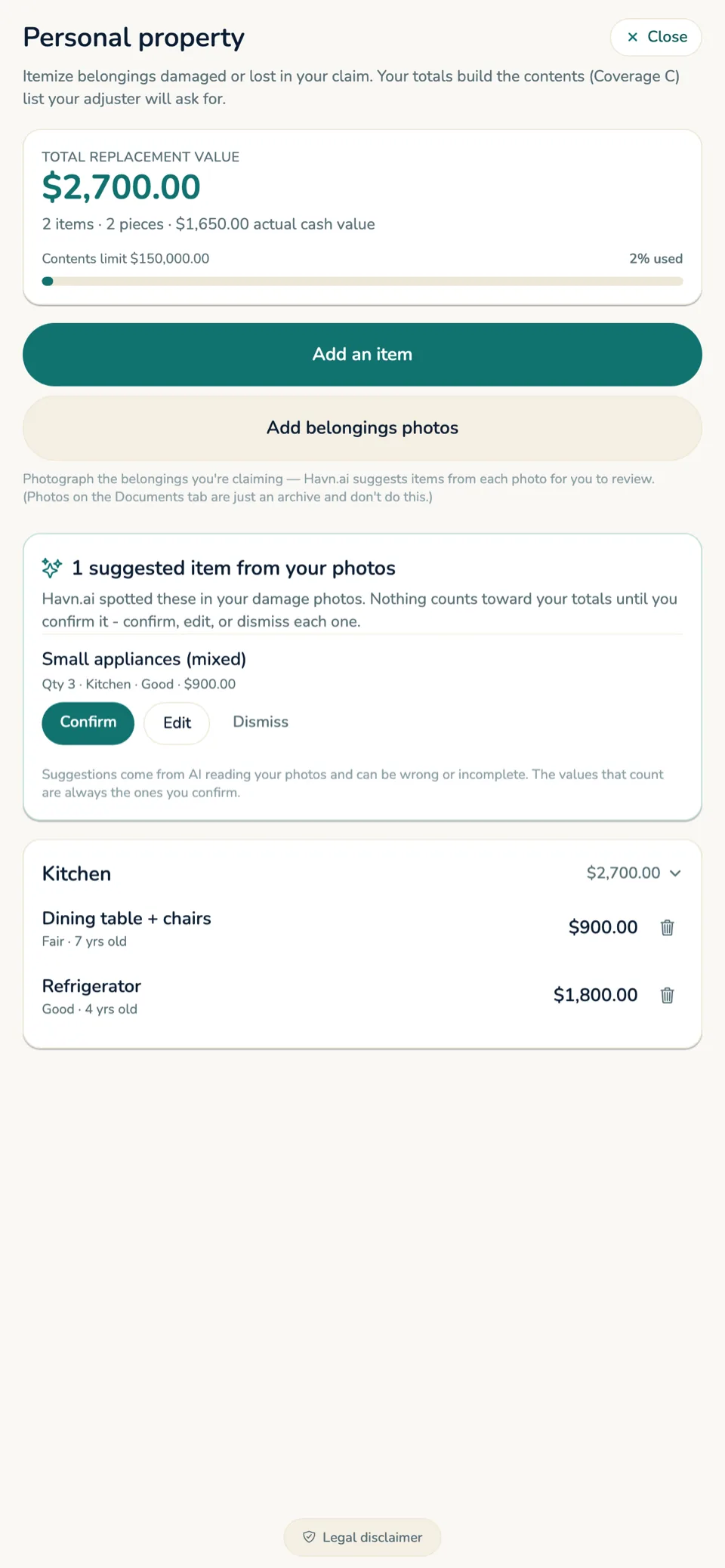
Contents inventory, with AI suggestions to confirm — demo data
Let's talk about your project
A short call is usually enough to tell whether we're a fit. No pitch deck, no obligation.